Georgia's Silk Cloud is deploying Nvidia Blackwell Ultra GPUs, and the feed notes that UK-based Fuse Energy is also bringing GPU compute online for customers.
Why it matters Adds to the wave of GPU capacity coming online outside the largest hyperscalers, which may matter for regional AI access.
A new power usage effectiveness-style metric, PCE, measures how much provisioned power goes to compute rather than support systems, so operators can reclaim stranded capacity.
Why it matters Reclaiming stranded capacity could let operators meet AI demand without waiting for new grid connections or upgrades.
Front-of-the-meter power, generation supplied to the grid ahead of the customer's meter, is being examined as a way for data centres to ease grid strain and expand capacity.
Why it matters It matters because grid connection is becoming the main constraint on data centre growth, and this model could shape where and how new capacity gets built.
Operators say efficiency gains and flexible workloads could free up near-term power for AI, but utilities will want evidence that the cuts can be delivered on demand.
Why it matters Grid planners will not accept promised power savings without proof they work when the network is under strain.
An analysis argues that AI's costs are often pictured as chips and power alone, overlooking the storage needed for data generated after each model response.
Why it matters Storage of inference data can add substantial, easily overlooked expense to AI budgets, affecting planning and total cost.
Google Cloud and Nvidia are deepening their co-engineering partnership to build infrastructure for agentic AI, which runs continuous, multi-step workflows that strain traditional systems.
Why it matters Enterprises running agentic AI will need both raw performance and flexibility in models and data, which shapes infrastructure choices.
Google, Red Hat, IBM and others have released llm-d 1.0, an open-source, Kubernetes-native stack for distributed LLM inference, developed with more than 500 contributors under the CNCF.
Why it matters It matters because it offers an open, vendor-neutral way to run inference for agents across both TPUs and GPUs, reducing dependence on a single platform.
Google describes new Google Distributed Cloud features aimed at organisations that must keep sensitive data on-premises under sovereignty, defence or critical infrastructure rules.
Why it matters Regulated sectors that cannot send sensitive data to public clouds are being offered a route to running AI agents in production.
Nscale has lost a Microsoft contract after delays in grid connections threatened its AI project schedules, leaving customers unwilling to wait for power.
Why it matters It shows how grid bottlenecks can cost AI developers major customers, not just delay construction.
An outage at a data centre left Portugal's National Health Service unable to issue prescriptions, also cutting access to the national user registry and health records.
Evaporative cooling is difficult to justify on water-use grounds, yet some operators still favour it for lower upfront costs, efficiency and performance in dry climates.
A GitHub project called gpu-unlock reportedly examines FP and BF16 instruction issue rates on Nvidia 3000-series cards, and has drawn a lively Hacker News discussion.
Actyus, Adequita and Nethits have launched a fund to finance edge data centres, smaller facilities that bring computing closer to businesses and government agencies.
Anthropic's Claude Opus 5.5 and Claude Sonnet 5.5 models are now selectable within Google Antigravity, Google's developer platform, letting users pick a model per task.
Samsung is building a large new semiconductor manufacturing complex at Pyeongtaek, South Korea, to meet rising demand for the specialised memory chips used alongside AI processors.
A Microsoft Azure blog post argues that a flexible sovereign architecture lets organisations place each workload in a suitable environment, from edge to cloud, with the required controls applied.
Google Cloud has announced general availability of an Anthropic-managed version of Claude, giving customers more choice in how they deploy generative AI models.
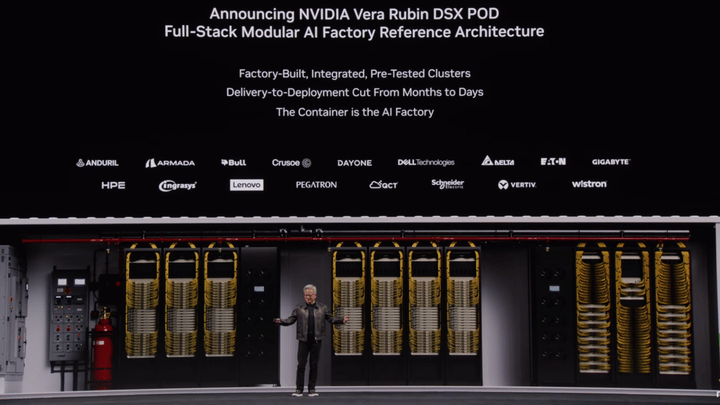
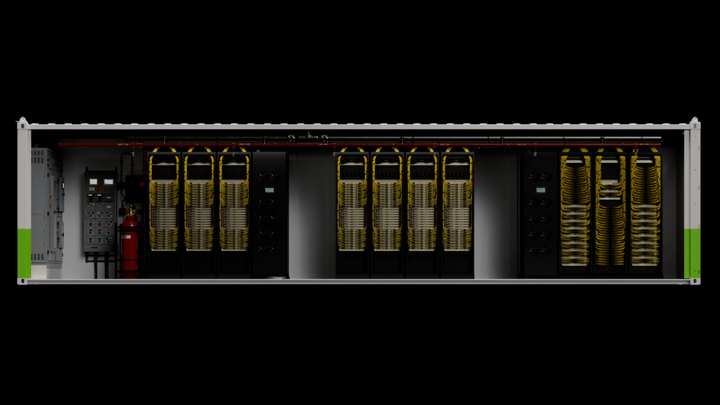
Nvidia has launched its DSX POD in Berlin, claiming it can shorten AI data centre deployment times, while a Greenpeace protest highlighted public opposition to the industry's expansion.
Google Cloud is offering Gemini-based enterprise search within Google Distributed Cloud for sovereign and highly regulated customers, such as national security agencies handling classified material.
AWS's weekly roundup reports that Lambda can now run plain HTTP servers without an adapter, and that S3 can be provisioned from within the Vercel Marketplace.
The post introduces an Agent Compute Engine and wider governance controls for agents, arguing that running autonomous agents securely is chiefly an infrastructure problem.
Amazon Web Services has launched ECS Gateway, an account-level resource that automatically provisions and manages ingress networking for containerised workloads, with resources created in the customer's account.
An essay comparing enterprise AI to electricity, arguing that once it becomes infrastructure, the economic question shifts from whether to use it to how efficiently it is run.
A survey finding that 28 per cent of enterprise software budgets go on changes firms would not have chosen, raising the question of where legitimate maintenance ends and vendor leverage begins.
An article argues that enterprise AI needs an understanding of how a business actually operates, since powerful models can otherwise miss the constraints that decide a sound outcome.
ZenteiQ, an IISc spinout building sovereign scientific models under India's IndiaAI Mission, reports a fourfold gain in batch inference scale using Google's GKE Inference Gateway.
Google Cloud has made generally available its Confidential G4 instances with NVIDIA Blackwell GPUs, designed to protect data while it is being processed.
The shares of South Korean data centre firm Elice have disappointed in its IPO, which the report presents as a sign that investor appetite for AI-linked listings is waning.
Google has released TorchTPU, its native PyTorch stack for TPUs, as open source on GitHub, announced at the PyTorch Conference 2026 alongside other tools for running PyTorch on Google Cloud or private infrastructure.